#freecongo
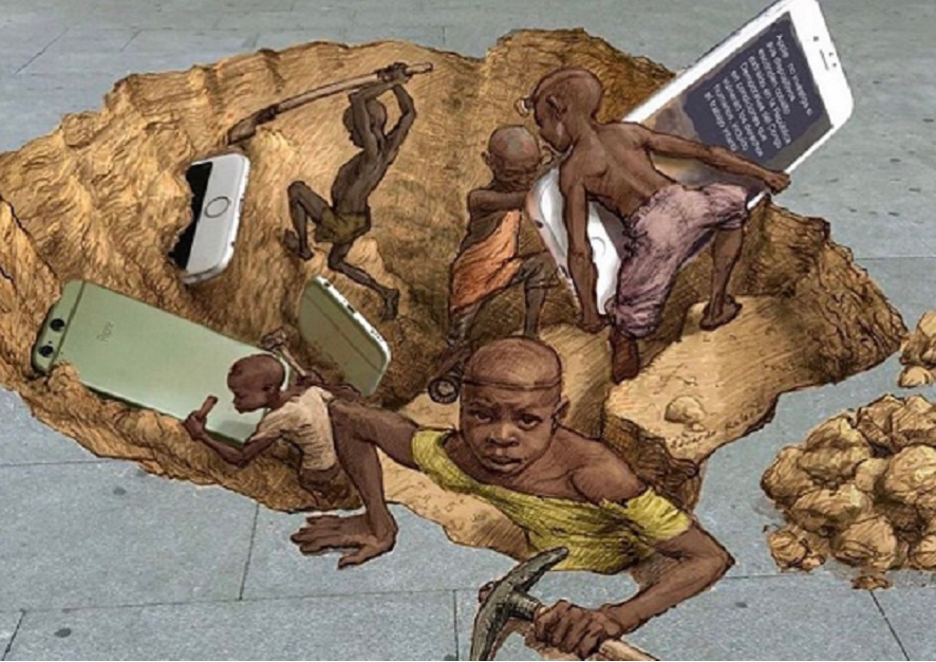
The hashtags “free congo” and “congo is bleeding” have been trending lately. For this investigation, I chose three images from a growing media company that is focused on Africa and countries around the world that have significant diaspora communities. The image below appears in a piece about the crisis in Congo[i]. It shows children toiling, digging, and carrying loads of earth out of a mine. Apple’s most ubiquitous product, the iPhone, appears several times in the image. It is the material reward for the children’s labor; a reward which is hundreds of dollars and perhaps hundreds of lifetimes beyond their reach. The image provokes a sense of outrage, tenderness, even sadness. Most effective, however, is its communication of the tradeoffs – primarily young, innocent lives – that exist in an unthinking, hyperconsumerist polity.
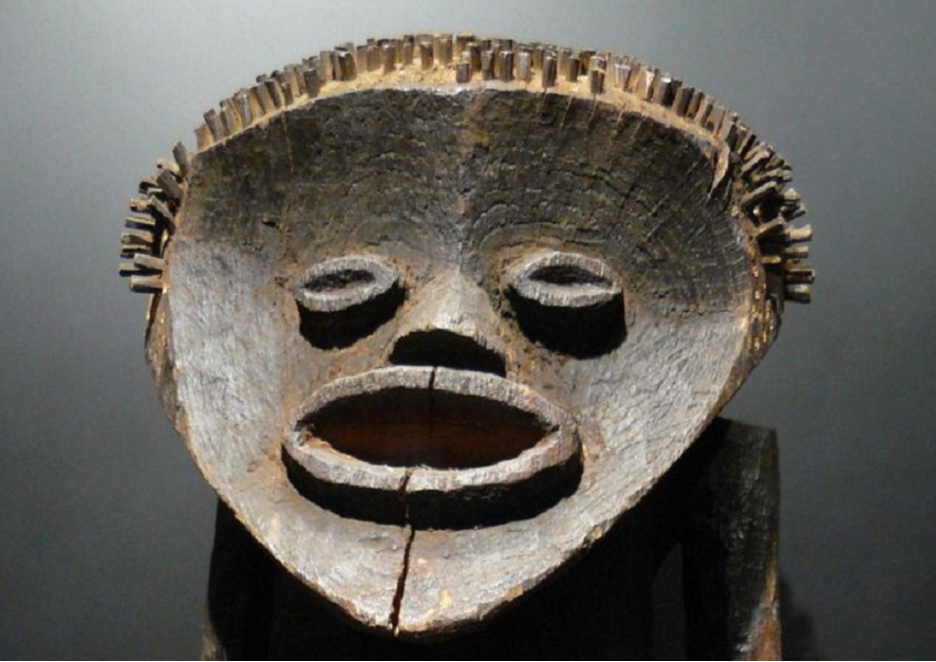
Another article discusses the controversy surrounding a planned art exhibit of Congolese art by a Dutch gallery[ii]. In the article, we are introduced to Congolese activists who appropriated a piece from the gallery, claiming that it was stolen indigenous art that rightly belongs back in Congo. Setting aside the radical nature of the act and potential issues of legality, a more careful examination of the action to repatriate that single piece of art to its rightful context uncovers the injustice of western adventurism in Congo. Without the particular history of the piece in question, one can still imagine how much art has been extracted from Congo over the years for safekeeping, commerce, or any other clever motive that could have been devised by western occupiers. Indeed, there is a direct link between this history of wanton pillaging and the abuse of minors in cobalt mines today.
The third and final image is one that many have seen by now. It explains the kind of dehumanization that has made abuse of children in cobalt mines acceptable to the western gaze. The image itself is of a young Congolese man, ripped away from his home in order to be put on display like a caged animal[iii]. As a matter of fact, the man, not that much older than a freshman in college, is locked in a zoo and put on exhibit alongside apes. The cruelty, the depravity, and the callousness displayed in the image – again – explains much of the desensitization towards young African men and women that are met with the circumstances that we observe in the Congo today.

[i] Face2Face Africa. “#CongoIsBleeding: New Hashtag Draws Attention to Deadly Exploitation in Congolese Mines,” October 22, 2020. https://face2faceafrica.com/article/congoisbleeding-new-hashtag-draws-attention-to-deadly-exploitation-in-congolese-mines. [ii] Face2Face Africa. “Black Activists Took Congolese Art from Dutch Museum Streaming the Activity on Facebook,” September 11, 2020. https://face2faceafrica.com/article/black-activists-took-congolese-art-from-dutch-museum-streaming-the-activity-on-facebook. [iii] Face2Face Africa. “After 114 Years, Bronx Zoo Apologizes for Putting Congolese Man Ota Benga on Display in a Monkey House,” August 3, 2020. https://face2faceafrica.com/article/after-114-years-bronx-zoo-apologizes-for-putting-congolese-man-ota-benga-on-display-in-a-monkey-house.


Comments