A Playground from Hell
(Based on interviews conducted by Sky News, CBS News, and WSJ)
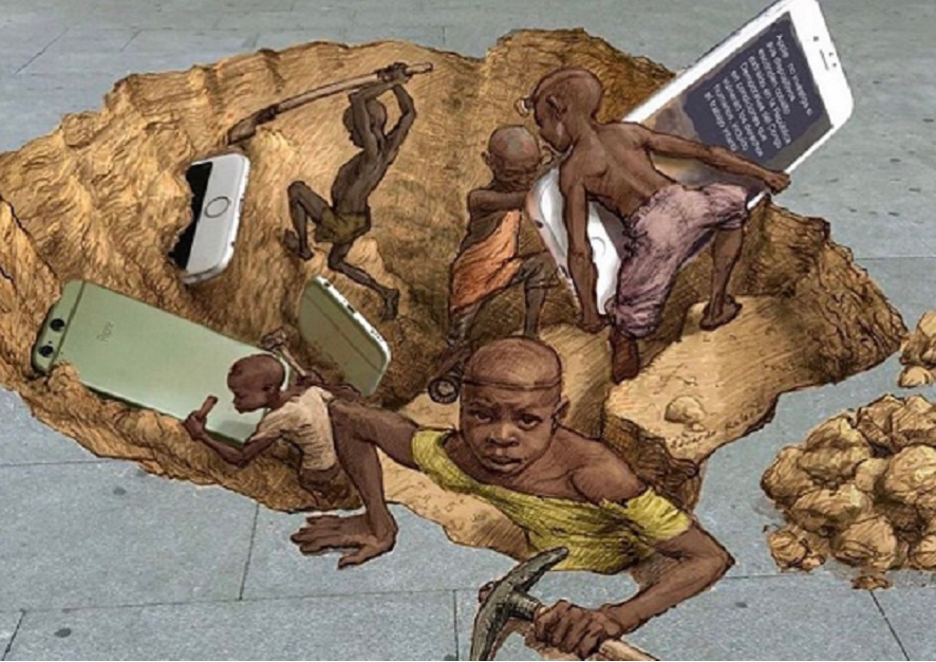
Several international news organizations have highlighted the situation in Democratic Republican Congo (DRC) since Amnesty International released its groundbreaking report about human rights violations in the country’s cobalt mines[i]. The various exposés depict an upsetting situation; children – many of them barefoot, in tattered clothing, and effectively emaciated – grinding their innocence away against the mineral-rich earth. One of the children interviewed shares the horrific experiences that forced him into the mines. Ziki’s parents, both departed, left him a cruel inheritance: an ailing grandmother that cannot fend for herself and a future for himself and his family that all but guarantees struggle, many nights of hunger, and an entirely avoidable but untimely death[ii]. To push back against this heirloom, Ziki seeks to divine for himself a future that may – hopefully and doggedly – approximate something of a decent life. With no other viable pathways in front of him, Ziki commits to spending twelve hours under the brutal sun every day scouring the earth for elements that make up consumer products that he will never – not in several lifetimes – even contemplate purchasing for himself.
Dorsen, actually much younger than Ziki, is marooned in the same sick cycle of forced poverty. Together with Richard, another child miner and their fathers, Dorsen and his family can best be described as belonging to nomadic mining communities[iii]. This label reveals something entirely sinister about what is happening to the individuals that belong to these communities. Global demand for cobalt, a mineral that was virtually worthless fifteen or twenty years ago, is forcing communities in faraway locales to bend, transform, and fracture in irreparable ways. Communities that were once agricultural, bound together by strong values of belonging and a strong sense of place, are now being torn apart by the allure of economic survival in mining communities that are sprouting across the country. As these locales' mineral deposits come under increasing stress and the competition for mining space threatens the safety and financial prospects of the miners, they are compelled to seek out unexploited regions that can accommodate them. As Dorsen and Richard – once forced into an unnatural nomadic lifestyle and now finally placed in an orphanage some distance away from their mining community – are pictured settling in their new home, they are reintroduced to the very things that globalization has stolen away from them: the safety and warmth of a caring community, the stability of home.
While communities are ravaged, defaced, and debilitated in Africa’s core, the machine that gave us centuries of slavery and imperial adventurism institutes its neocolonial agenda with ruthless efficiency. How else does one explain the reality that the mines that Ziki, Dorsen, and Richard work in churn out half of the world’s cobalt but retain almost nothing of the profit earned from the precious metal? How does one reconcile the eighty-thousand dollars per ton price tag of cobalt to the eight British pence that Dorsen’s father earns for a full day’s work[iv]? How is it not rotten, corrupt, and unethical that Dorsen’s father has to promise him that he will not die in a fifteen-foot mining tunnel while he is away in the orphanage receiving three meals a day for the first time in his life, this while Asian and Caucasian men cart away African wealth in foreign-made trucks? How can artisanal miners, who are neither treated nor compensated as their title would have you believe, receive nothing but pain, broken dreams, and physical sickness from an activity that is so lucrative for intermediaries, mining companies, component manufacturers, and electronic and car companies[v]? How is this not modern-day slavery? How can it possibly be anything but?

Comments