A Love-Hate Triangle: Tesla in California

What are we missing this time?
“You know, this place is really like a bubble!”—farewelled my Airbnb host and longtime silicon valley resident Miranda last August. Having worked for many years as an online organizer for Burning Man, Miranda opened her remodeled colonial house for travelers around the world.
Indeed, the uniqueness and pioneering spirits of Silicon Valley go hand in hand with a level of political and cultural insulation from the rest of the world—insulated enough for changes sprout but connected enough to be influential. For good and for bad, Silicon Valley has the power to set industry trends and define consumer appetite globally. The interplay on various scales, of local and global, of electoral politics, big-tech, and individual activism is perhaps nowhere more pronounced than the contention surrounding the (at least currently) Palo Alto-based Tesla. With California literally on fire, the environmental front of this electric car maker is at the forefront of this investigation.
By many accounts, California's transition to sustainable energy is applaudable: as of 2018, the most populous state accounted for half of the electric cars bought in the US and the largest solar market in the country. The same year, the state has sworn by executive order to run on carbon-free electricity by 2045. A 2020 mandate requires all new homes to install solar rooftops.
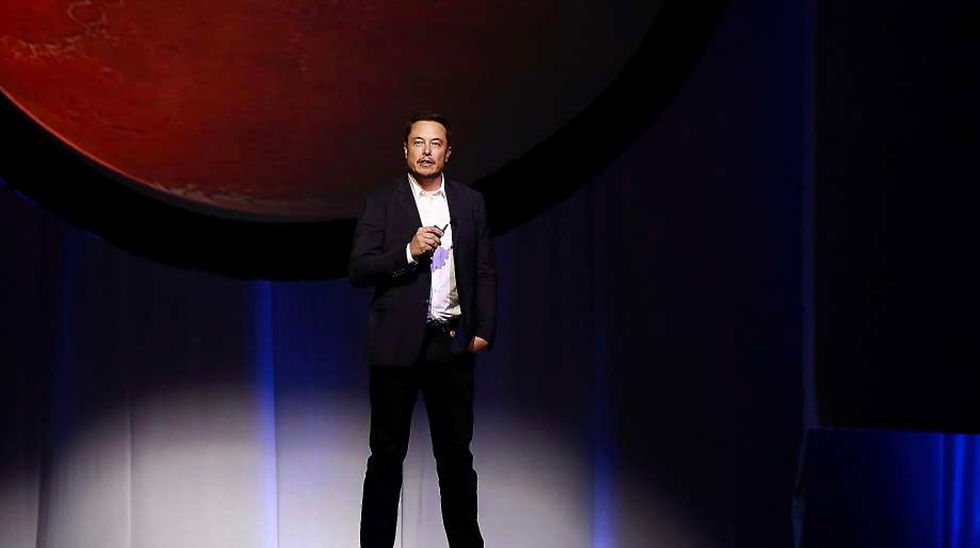
All but more exciting was the “Battery Day,” or Tesla’s annual shareholder meeting, which announced its drastically upgraded, and cobalt-free electric storage. To some, this much-hyped event marks a historic turning point for the storing and management of energy—increasing reliability of clean power sources, countering the dependence on fossil fuels, and driving down the cost of an environmentally friendly life. With the price of photovoltaic (PV) solar cells dropping, the news from California makes our global future sound promising.
California does keep a shining environmental record, by some accounts. From the top-down, the state government has been a vanguard for environmental causes. In the 1970s, Governor Jerry Brown(D) already started prioritizing solar power (to a less than receptive audience.) In 2006, Governor Arnold Schwarzenegger(R) set out to return the greenhouse gas emission to the 1990 level by 2020, which second-time Governor Jerry Brown signed into law with a “cap-and-trade" clause. (Proposals to adopt “cap-and-trade” never passed the U.S. Congress.) In 2018, Brown signed an executive order which aims to make California fully carbon-neutral by 2045. In 2020, incumbent Governor Gavin Newson set goals to make all passenger vehicles zero-emission by 2035—good news for electric car makers.
However, a closer look at these government proposals suggests a less rosy picture. Angel Hsu of Yale University suggests in a study that combined and calibrated individual commitments, such as California’s, only bring about marginal benefit to the reduction of overall CO2 emission (1.5bn-2.2bn tonnes by 2030 compared to 52bn tonnes emitted each year globally.) As critics rightly observed, for politicians, the “selfie initiatives” to please green-minded constituents often lack quantifiable goals, clear mechanism, and monitoring process—a set of difficulties also common among global and transnational governance bodies (e.g., the UN.)
Another side of the triangle— favoring the private-sector relies on a bottom-up consumeristic logic: environment-minded activists-consumers would buy smart, buy ethically, and buy cleanly. The hope is that rational consumers incentivized by reduced price spending on energy and electric cars would eventually lead to an economy of scale, which would further drive down costs, and spill environmental benefits globally in a sustainable manner.
It might be helpful to review California’s environmental history, one that is often discounted from politics and shareholder reports. Aside from the catastrophic hydraulic gold-mining and the LA smog, the draining of the Owen Valley for LA’s water supply last century resulted in one of the worst dust pollutions in U.S. history. The damming of the majestic Hetch Hetchy river in Yosemite National Park was the center issue amongst two camps of conservation efforts in America: one headed by John Muir, advocating for preservation and protection of natural lands; and the other, headed by Gifford Pinchot, promoting the wise use (but often exploitation) of natural resources. (John Muir lost the debate by the way.)
A history of over-logging, the removal of native flora, the displacement of native fauna, and the subsequent poor urban planning also made California, particularly the Bay Area, vulnerable to environmental hazards such as wildfires. The trend of extraction and exploitation of natural resources for the pursuit of “progress” would alarm some environmental activists in familiar ways. After all, solar-panel arrays rapidly altering landscapes, threatening wildlife such as the migrating birds, the Mojave tortoise, or the Blunt-nosed Lizards, would remind us of the mighty human endeavors to “improve” our conditions not so long ago, in California.
So far as our global climate agenda is still compatible with the narrative of progress, we might ask--in the name of progress--what could we be missing this time?
Bibliography:
“Businesses Compete to Battle California’s Blackouts.” 2020. The Economist. https://www.economist.com/business/2020/08/27/businesses-compete-to-battle-californias-blackouts (October 7, 2020).
“California Leads Subnational Efforts to Curb Climate Change.” 2018. The Economist. https://www.economist.com/international/2018/09/15/california-leads-subnational-efforts-to-curb-climate-change (October 7, 2020).
Connolly, Kate. 2020. “Germans Divided over Plans for Tesla Electric Car Factory.” The Guardian. https://www.theguardian.com/world/2020/feb/19/germans-divided-plans-tesla-electric-car-factory-environmentalists-tree-felling (October 7, 2020).
Gifford Pinchot, and Char Miller. 2017. Gifford Pinchot : Selected Writings. University Park, Pennsylvania: Penn State University Press. accessed through ebscohost (October 7, 2020).
Lambert, Fred. 2020. “Tesla Restarts Fremont Factory despite Conflict with Authorities [Update: Musk Openly Defies Order].” Electrek. https://electrek.co/2020/05/11/tesla-workers-return-fremont-factory/ (October 7, 2020).
Pinchot, Gifford. 1967. The Fight for Conservation. Seattle : http://hdl.handle.net/2027/mdp.39015065431846.
“Q&A: How California’s Ban on Gasoline-Powered Cars Affects You – Silicon Valley.” https://www.siliconvalley.com/2020/09/26/qa-how-will-californias-ban-on-gasoline-powered-cars-work/ (October 7, 2020).
Simpson, John W. (John Warfield). 2005. Dam! : Water, Power, Politics, and Preservation in Hetch Hetchy and Yosemite National Park. New York: Pantheon Books.
“Tesla-Impact-Report-2019.Pdf.” https://www.tesla.com/ns_videos/tesla-impact-report-2019.pdf (October 7, 2020).
“Top 10 Worst Environmental Decisions in California’s History.” 2020. Legal Planet. https://legal-planet.org/2020/05/07/top-10-worst-environmental-decisions-in-californias-history/ (October 7, 2020).
Comments